Considering a home in Cherokee Valley because you love the course, the views, and the community vibe, but you also want your capital to work hard? You are not alone. Many affluent buyers in Greenville County weigh lifestyle alongside stewardship and exit value. This guide gives you a clear framework to evaluate carrying costs, resale drivers, and practical ROI scenarios for a private golf community. Let’s dive in.
Greenville County market snapshot
Greenville County continues to attract new residents thanks to job growth in advanced manufacturing, healthcare, and professional services. Downtown Greenville and nearby outdoor recreation add to the quality-of-life appeal that supports demand for higher-end housing near premium amenities.
At the luxury end, homes trade less frequently than entry-level properties. Liquidity is lower, time on market can be longer, and price discovery is more local. In a private golf setting, condition, lot quality, and membership transferability often play a larger role at resale than the broader market.
Golf-community demand is a niche within a niche. Buyers value lifestyle and social aspects alongside the property itself. While national golf participation shifts over time, well-managed clubs with strong amenities often maintain stable interest. Even in a strong county, the market is cyclical, so it is wise to model conservative appreciation and stress-test assumptions.
Ownership economics at a glance
Think of ownership as a set of recurring and periodic costs. Understanding each line item helps you compare homes and model long-term outcomes.
Mortgage and financing
For leveraged buyers, interest expense is usually the largest carrying cost. Loan type, rate, and term shape monthly cash flow and long-run cost of capital. Consider fixed versus adjustable options, buy-downs, and a plan to refinance if rates change.
Property taxes
South Carolina’s effective property tax rate is relatively low compared with the U.S. median. Even so, millage changes and reassessments can affect your annual outlay. Verify current rates and assessment methodology for specific properties before you finalize assumptions.
Private club costs
In a private golf community, initiation fees, monthly dues, food and beverage minimums, capital assessments, and transfer fees matter. Membership structure is key. Equity versus non-equity, transferable versus non-transferable, and mandatory versus optional membership each carry different financial implications for owners and future buyers.
HOA or POA assessments
Community dues fund common-area upkeep, roads, landscaping, and gate or hardscape maintenance. Review reserve studies and the last 3 to 5 years of financials so you understand whether reserves are robust or if special assessments are likely.
Maintenance and operations
Plan for landscape care, irrigation, exterior painting, roof and HVAC servicing, pool maintenance, pest control, and driveway or hardscape repairs. Larger homes, estate lots, and high-end finishes increase upkeep. Golf-course adjacency often brings stricter standards and architectural review fees.
Insurance and risk
High-value homes often require tailored policies and higher premiums. Check for flood zone status and storm or runoff risk, which can raise costs or require flood insurance. Confirm how master policies interact with individual coverage for exterior and interior losses.
Utilities, security, amenities
Bigger homes consume more electricity, water, and gas. Private well or septic versus municipal service will affect expenses. In gated settings, security staffing and community amenities can add to ongoing costs.
Rental restrictions
If you plan to offset costs with rental income, verify the community’s policy. Some private or deed-restricted communities limit short-term rentals or cap annual rentals. These rules can shape your income projections and overall ROI.
Resale drivers in golf settings
Certain features tend to preserve value better in private golf communities, especially among buyers who prioritize lifestyle and long-term stewardship.
Membership transferability and club health
Transferable memberships with transparent initiation fee histories reduce friction at resale. Clubs with modern facilities, stable finances, and a healthy membership pipeline often support property values.
Lot quality and location
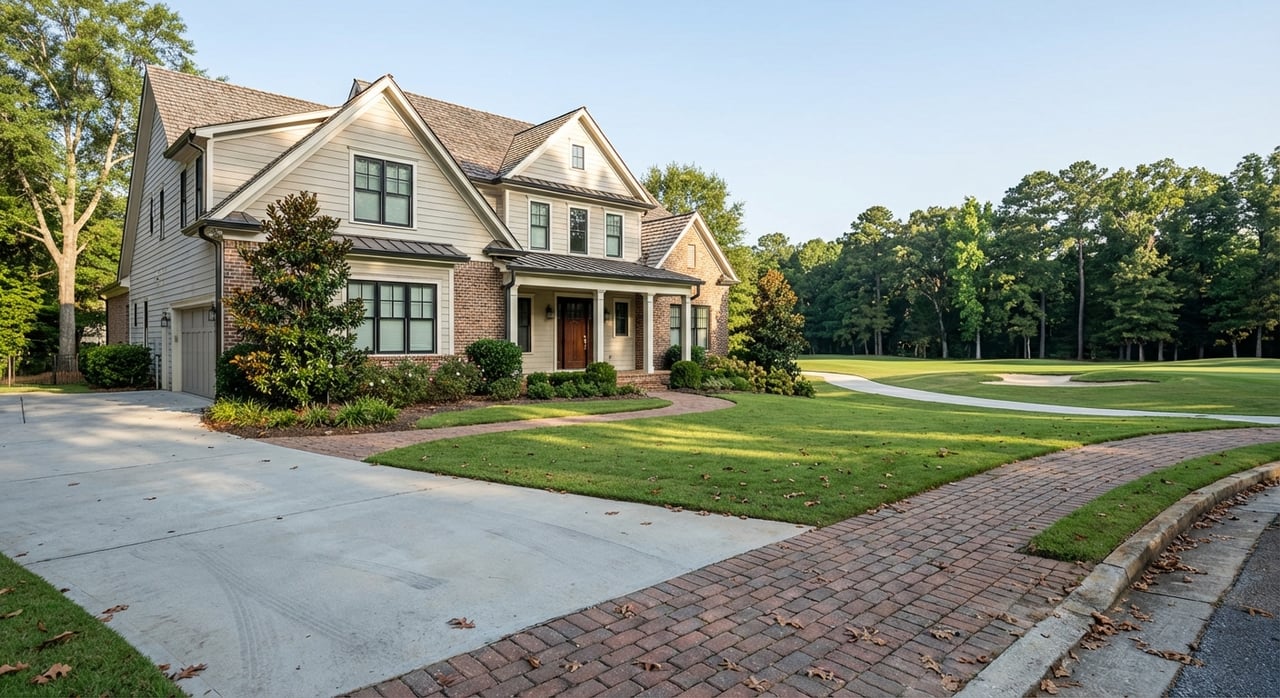
Golf views, privacy, larger lots, and orientation that highlights natural scenery often outperform standard parcels within the same neighborhood. Cul-de-sac positions or homes backing to preserved open space also tend to attract attention at resale.
Course condition and design
Well-maintained courses with thoughtful routing and aesthetic harmony between homes and the landscape add appeal. Courses by notable architects or with resort-style conditioning can become part of the property’s story.
Clubhouse and lifestyle amenities
Dining, fitness, pools, tennis or pickleball, and a robust social calendar widen the buyer pool beyond avid golfers. Strong lifestyle programming is a practical benefit and a marketing advantage.
Home quality and timeless design
Solid construction, durable materials, and floor plans that age well hold value. Features like guest suites, mudrooms, and home offices are useful today and remain relevant for future buyers. Overly personal finishes can narrow the audience.
Covenants and governance
Clear, predictable covenants that protect standards without feeling onerous support values. Transparent reserves and consistent fee structures reduce the risk of surprise assessments, which prospective buyers notice.
Proximity to regional nodes
Access to downtown Greenville, the GSP airport, healthcare, and outdoor recreation are important for many buyers. Shorter, more convenient trips to these nodes can help a home stand out.
Market comps and scarcity
Limited inventory inside the community can tighten supply and support pricing. At the same time, remember that national studies show mixed results on golf-course adjacency premiums. The condition of the course and nearby operations matter, so evaluate the specific setting.
Due diligence checklist
Use this concise checklist to gather the facts you need for a confident decision.
Documents to request
- HOA or POA budgets and audited financials for the last 3 to 5 years
- Current reserve study and capital improvement plan
- Club financials, membership roll, initiation fee history, and transfer policies
- Board and club meeting minutes that discuss assessments or capital projects
- Architectural standards, deed restrictions, and enforcement practices
- Master insurance policies and claims history, if applicable
- Notices of pending litigation or disputes
Property-specific inspections
- Full home inspection, plus roof and HVAC reports
- Pest and termite history or bonds
- Irrigation check and septic inspection if not on municipal sewer
- FEMA flood map review and drainage assessment
- Tree survey when privacy or views depend on mature trees
- Boundary survey, easements, and setback confirmation, especially near the course
Local market research
- Comparable sales within the community for similar lot types over the last 24 months
- Days on market and sale-to-list ratios for the community and the top tier of Greenville County
- Historical initiation fee transfers if those fees are material at resale
Conversations to have
- Club management on membership strategy and planned capital projects
- HOA leadership on maintenance priorities, reserves, and recent special assessments
- Recent sellers and local brokerages that specialize in luxury golf communities
Model your ROI
Before you fall for a view or a fairway, put the numbers into a simple model. A consistent framework helps you compare options and avoid surprises.
Key formulas to use
- Annual carrying cost = mortgage principal and interest, or opportunity cost of cash if buying without a loan, plus property taxes, homeowner and flood insurance, HOA dues, mandatory club dues, routine maintenance, utilities, and annual reserve contributions.
- Gross rental yield, if permitted = annual rent divided by purchase price.
- Net rental yield, if permitted = gross rent minus expenses and vacancy divided by purchase price.
- Break-even years = purchase price minus estimated selling costs and expected continuation of carrying costs, divided by expected annual net appreciation in your base scenario.
Scenario planning
- Run conservative, baseline, and optimistic appreciation cases. For example, you might test 0 to 2 percent, 3 to 5 percent, and 6 percent or more per year.
- Sensitize your model to interest rate changes if you plan to finance. Also include a forced-sale discount to reflect lower liquidity at the top end.
- Compare carrying costs as a percentage of home value across the properties you are considering. This normalizes differences in dues and taxes.
Risk factors to stress-test
Even strong markets cycle. Build a buffer for the factors below so you are prepared for different outcomes.
- Employment shifts that slow in-migration or luxury demand in Greenville County
- Interest rate changes that affect financing costs and buyer affordability
- New supply in competing luxury communities that may absorb demand
- Increases in club dues, initiation fees, or special assessments
- Lower liquidity for higher-end properties that can extend marketing timelines
Stewardship that protects value
Approach ownership with a mindset of long-term care. It improves your experience and helps preserve value at exit.
- Maintain landscape quality and irrigation, especially along fairways and high-visibility areas.
- Keep mechanicals serviced and document maintenance. Buyers pay attention to records.
- Favor timeless, neutral finishes and floor plans that serve varied lifestyles.
- Engage with HOA and club updates so you can plan for capital projects and policy changes.
How Teresa can help
If you want clarity on Cherokee Valley or comparable Greenville County communities, a local, luxury-focused advisor can save you time and reduce risk. You get help verifying real numbers, not guesses, and a strategy that blends lifestyle fit with careful stewardship.
- Local insight on buyer preferences for golf-course lots, views, and amenities
- Guidance on HOA and club documents, reserve strength, and assessment history
- Comparable sales analysis tailored to lot type and membership structure
- Listing preparation for current owners who want to optimize exit value
Have questions about a specific home, dues schedule, or resale strategy? Start a private consult with Teresa Jones to align lifestyle goals with a numbers-first plan.
FAQs
What carrying costs should I budget for a Cherokee Valley home?
- Plan for mortgage or capital cost, property taxes, homeowner and flood insurance if needed, HOA dues, club initiation and monthly dues if you choose membership, utilities, routine maintenance, and a reserve for repairs.
How do club initiation fees affect resale pricing in a private golf community?
- Transferable, clearly disclosed initiation fees can reduce friction for buyers and support pricing, while non-transferable or less transparent fees may require pricing adjustments at resale.
Do golf-course homes in Cherokee Valley always command a premium?
- Studies are mixed. Well-maintained courses and high-quality lots often see premiums, while proximity to maintenance operations or weaker course conditions can reduce or eliminate a premium.
What documents should I review before buying in a private golf community?
- Request 3 to 5 years of HOA financials, reserve studies, club membership data and transfer policies, meeting minutes on assessments or projects, architectural standards, and insurance details.
Are short-term rentals allowed in private golf communities like Cherokee Valley?
- Policies vary. Some communities limit or prohibit short-term rentals, and caps on annual rentals are common. Confirm written rules with the HOA and club before modeling income.
How liquid is the luxury segment in Greenville County compared with the broader market?
- Higher-end properties typically have a smaller buyer pool and longer marketing timelines, so liquidity is lower than the general market. Plan for a longer hold and price based on local comps and condition.