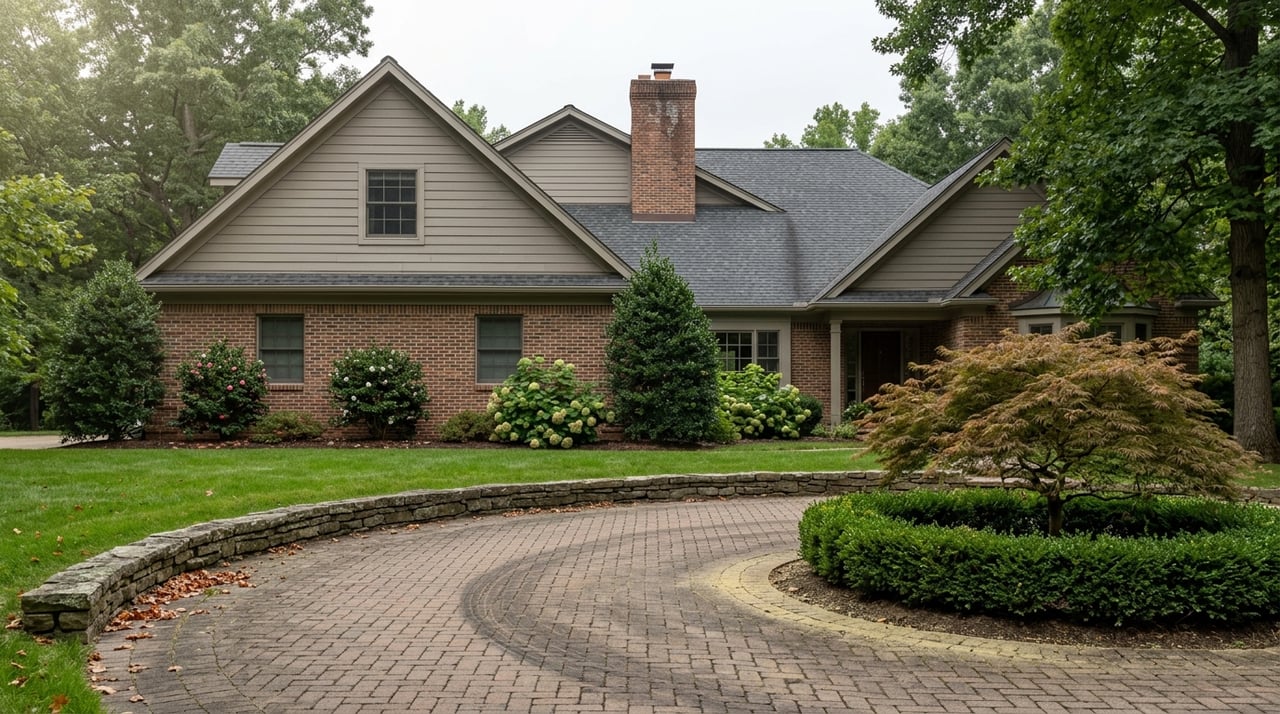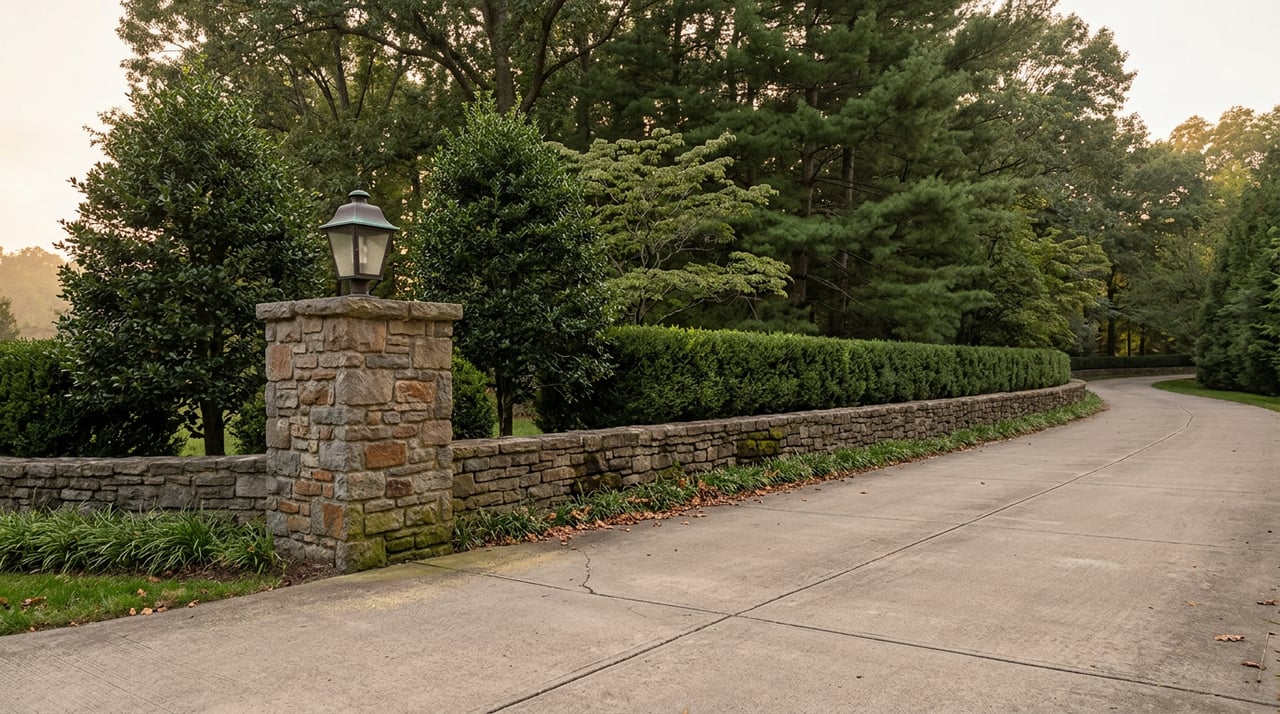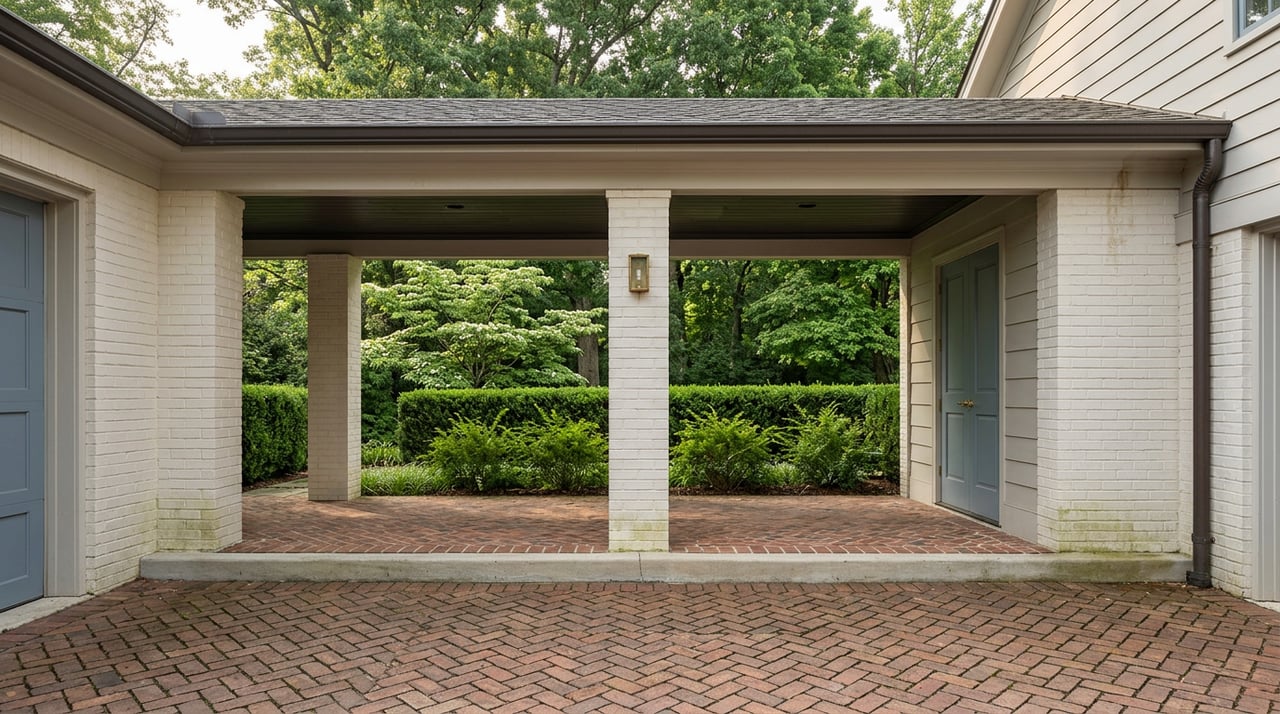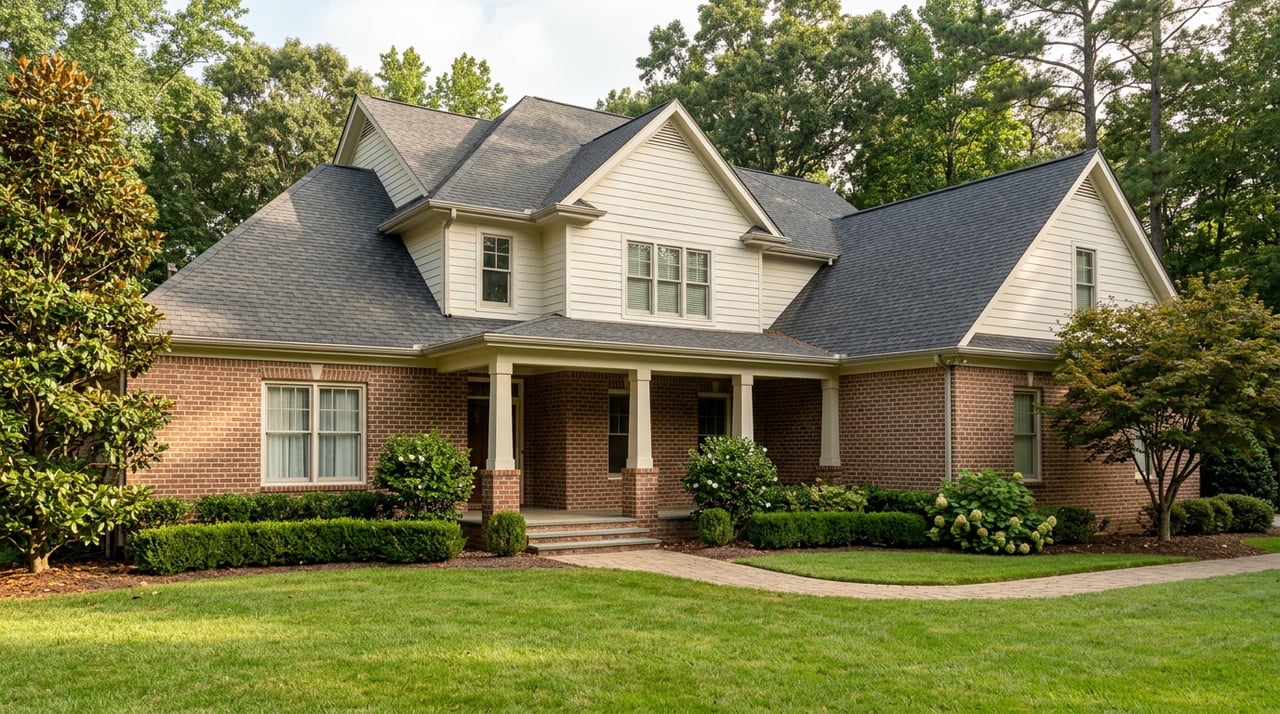
On July 13, Anthony and Anna Gallo stood in front of Greenville City Council, with neighbors who opposed their Avondale Drive plan in the same room. "All of your concerns are being heard," Anthony Gallo said. Eleven weeks later, on Sept. 28, Council voted 4–3 against the rule those concerns had produced.
The vote leaves North Main where it was before the fight. The width of a lot under the zoning code still decides how many houses can stand next to the one you are thinking of buying. The developer's own cost figures add a second point that is easy to miss. Each house removed from an infill plan raises the price the remaining houses have to sell for.
What 330 Feet of Frontage Allows Today
The site covers 240 E. Avondale Drive and 107 N. Avondale Drive, two parcels that The Gallo Co., a Greenville real estate firm, plans to turn into seven single-family homes. Today the 1.47 acres hold two dilapidated houses that were damaged and abandoned after Hurricane Helene. The rear wall of one has collapsed. When the neighborhood was first laid out, the property was split into five lots, not two.
Both parcels are zoned House C District, or RH-C, which allows lots as narrow as 40 feet. With 330 linear feet of street frontage, the site could hold about eight homes by right, according to the Greenville Journal. The seven-home plan is one home short of what the code allows. Councilmembers Tina Belge and John DeWorken both said the project can move forward as long as it meets design standards, and that the city has few options to stop it.
Residents raised traffic, stormwater running into nearby yards, and the loss of the tree canopy over North Avondale Drive. More than 800 people signed a petition against the project. Several neighbors told The Post and Courier they could accept four homes, maybe five.
The Price of Fewer Houses
That compromise has a cost, and Anthony Gallo explained it. The steep slope alone will take more than $1 million in sitework, and he estimated the whole project at more than $10 million. Those fixed costs are shared by however many houses get built.
| Homes on the Avondale site | Price per home the developer described |
|---|---|
| Seven, the current concept | More than $1 million each |
| Four, the number neighbors cited | About $2.5 million to $3 million each to turn a profit |
Under the seven-home concept, each house would be about 3,500 square feet, likely with four bedrooms and an attached garage. "A million and a half dollars is still a tremendous amount of money, but it's a lot less than $3 million," Gallo said.
The lower density that neighbors asked for is also the version that produces the most expensive houses. A four-home plan would put new construction in the region's slowest-moving price band. In the Greater Greenville Association of REALTORS® region, sales above $1 million rose 26.0% over the 12 months through August 2026, from 520 to 655. Inventory in that band was 464 homes in August, up 24.7% from a year earlier, and homes there averaged 66 days on market, the longest of any price range. Those figures cover the whole regional service area, not North Main alone. They still show how a builder would weigh selling four houses at $2.5 million or more against selling seven at a lower price.
The Rule That Almost Changed the Math
City staff drafted a fix as part of the Greenville Development Code's 36-month review. The Greenville Journal reported that the August draft would have required infill lots to be at least 66% of the average width of the surrounding parcels. By the time it reached Council, the threshold had risen to 70%, measured against the two parcels on either side of the property and the three parcels directly across the street. The Planning Commission added a condition that left out any neighboring parcel at least twice as wide as the average of the others.
In practice, if the surrounding lots averaged 100 feet wide, every new lot would have needed at least 70 feet. Lots of more than 3 acres would have been exempt. Staff tested the rule against the past year of subdivisions. About 10 lots, roughly a third of those the rule would have covered, would not have been created. City Manager Shannon Lavrin told Council the Avondale project would have produced fewer lots under the new formula.
Fewer lots on the same land, with the same sitework bill, would have pushed infill in North Main toward the four-home pricing in the table above.
Why a North Main Question Became a Citywide Vote
The amendment was not written for one street. It would have applied in all three House districts, RH-A, RH-B and RH-C, across the city. That scope decided the outcome.
Council separated the infill provision from the rest of the code package. The other amendments passed first reading, and the infill provision failed. Mayor Knox White and councilmembers Ken Gibson, Tina Belge and Lillian Brock Flemming voted no. Councilmembers John DeWorken, Dorothy Dowe and Wil Brasington voted yes. Members raised concerns about how the standards would affect affordable housing development around the city.
DeWorken, who lives in and represents North Main, was the rule's strongest supporter. "What the ordinance says to me is, 'We stand with the neighbors,'" he said. Gibson put his objection this way: "I don't dispute that this is probably a great plan for Avondale. … But to take this and use it as a blanket restriction on everywhere in the city is not looking out for the people in my neighborhood." A resident said the rule would block the mix of large historic homes and smaller modern ones found in some city neighborhoods.
Any new lot-width proposal now has to start over at the Greenville Planning Commission, which takes months. Members who voted no said they are open to a narrower rule that limits development where neighborhoods want that and allows growth where neighborhoods want more housing. The Gallos have said they are working on a revised Avondale plan with fewer homes. They have not said how many.
Reading the Block Before You Write an Offer
For now, the 40-foot RH-C minimum and the minimum widths in the other House districts are still the rules. A buyer looking at an in-town home should look at the parcels around it as closely as the house itself. These are worth confirming with the City of Greenville's planning staff and your agent before you sign:
- The zoning district of the neighboring parcels. RH-A, RH-B and RH-C each set their own minimum lot width, and that minimum controls what a subdivision next door could produce.
- Neighboring frontage compared with the minimum. At Avondale, 330 feet of frontage at a 40-foot minimum came to about eight possible homes. Running the same numbers on the lot next door or across the street takes a minute.
- Vacant, damaged or oversized lots nearby. The Avondale parcels drew a builder because two storm-damaged houses sat on land originally platted for five lots.
- Any subdivision application already filed. If the rule comes back with a vesting clause like the one in the August draft, projects approved before adoption would be grandfathered.
Owners of wide lots in House districts can use the same numbers from the other side. A builder looking at a lot will often count how many homes the code allows on it, and that count rests on a rule Council has now declined to change. This is general market context, not legal advice. Zoning questions about a specific parcel belong with the city and a qualified professional.
A Few Questions Buyers Ask
Is the Avondale Drive project approved? The reporting so far does not say whether a revised plan has been submitted, approved or withdrawn. The developer has said only that the home count will go down.
Could a lot-width rule come back? Yes. A new proposal would go through the Planning Commission first, a process The Post and Courier described as taking months. Members who voted no said they would consider a narrower version.
Does this matter outside North Main? The rejected amendment would have covered RH-A, RH-B and RH-C districts across the city. "Could you imagine if this happened all throughout North Main, or Gower or Augusta Road?" DeWorken asked.
If you own a wide lot in North Main, or are deciding what a house next to one is worth, Teresa Jones Home Sales can pull the zoning and frontage numbers for your parcel and the lots around it and show how they affect value. Request Your Home Valuation, and we will start with the lot as well as the house.